Reflections on Time, Daily Journaling and Pausing to Breathe
I did it again. I don’t regret buying another dated journal. But the space constraints (sometimes) bother me, resulting in switches between the bound Hibino and unbound Plotter binder pages at least a few times this year. And that is with the intention of keeping a daily log in my Hibino, regardless of where I decide to journal. Near the beginning of the year, I planned to fill the timeline and recap the day, every day, in the Hibino. But some days went by without me touching that daily book. I gravitated toward other mediums of reflection. Now I realize that even the blank space is meaningful. I’ll share some brief reflections about a few of my empty journal pages with you.
February 2026. I traveled from the US east coast to the west coast for a conference in Oakland, California, the annual Black Men’s Brain Health conference. To travel with just one bag, I left my Hibino notebook at home. I enjoyed the conference; it is one of my favorites. I talked with several people about their career trajectories, developed new collaborations, and met some of my academic heroes. When I got home, though, I was left with a few empty spaces in the dated journal, several that I did not bother to summarize from the writing in my Plotter binder, or I just wrote something like “conference.”
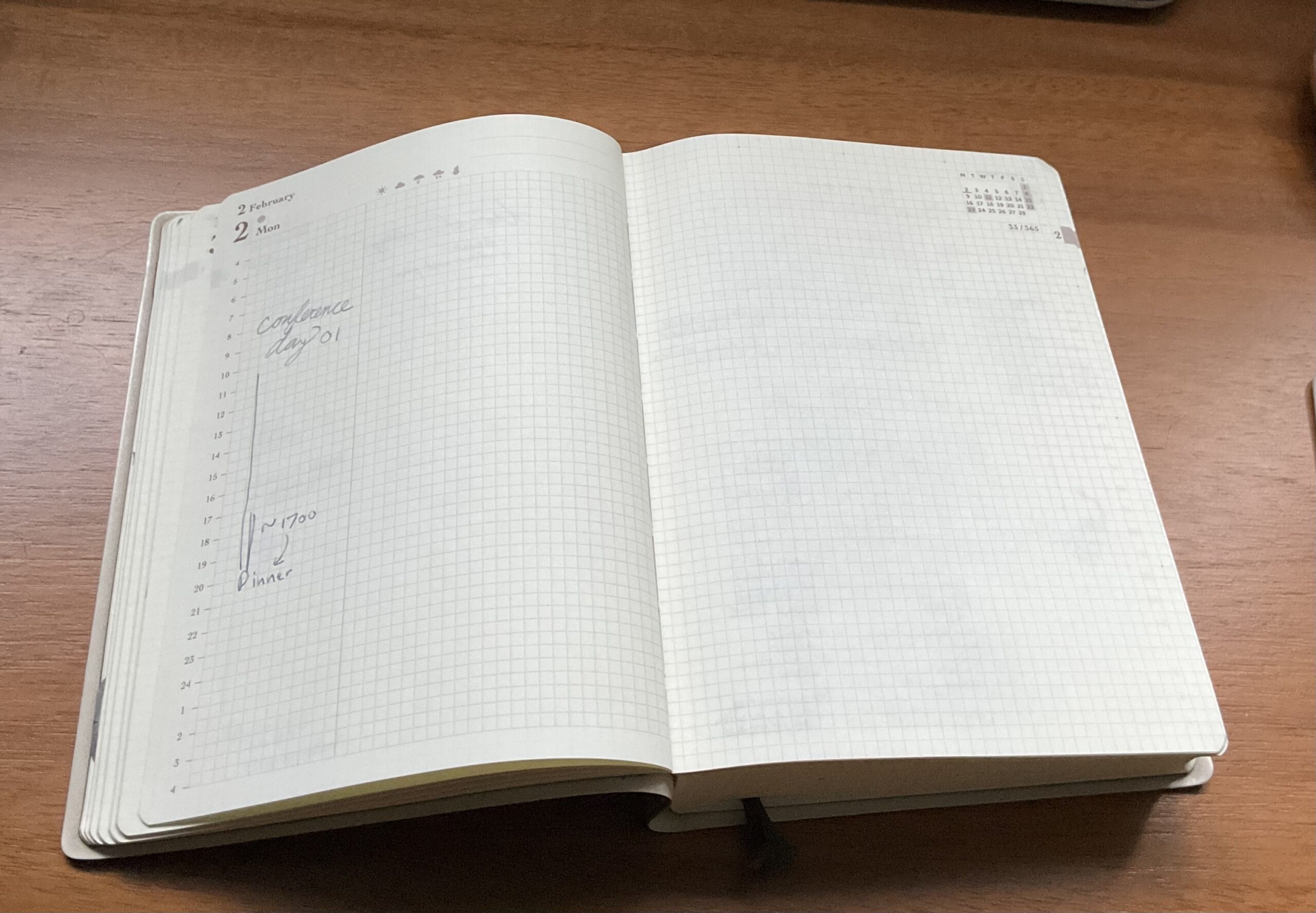
July 2026. This was a month of moving preparations: to sell, donate, or toss all of my belongings before transporting what remained from New York to South Florida. A cross-state move is not trivial. The empty spaces in my dated journal represented some of the days I spent working to transfer research funding and supplies, find a new place to live, re-lease my current place at the time, and get all of the necessary materials to safely and smoothly transport anxious, ten-year-old Rio. Even though this all happened with a lot of support, preparing to move monopolized my time. My typical summer of weeks-long vacation overflowed with admin in preparation of uprooting my life with the intention of advancing to the next stage of my career.
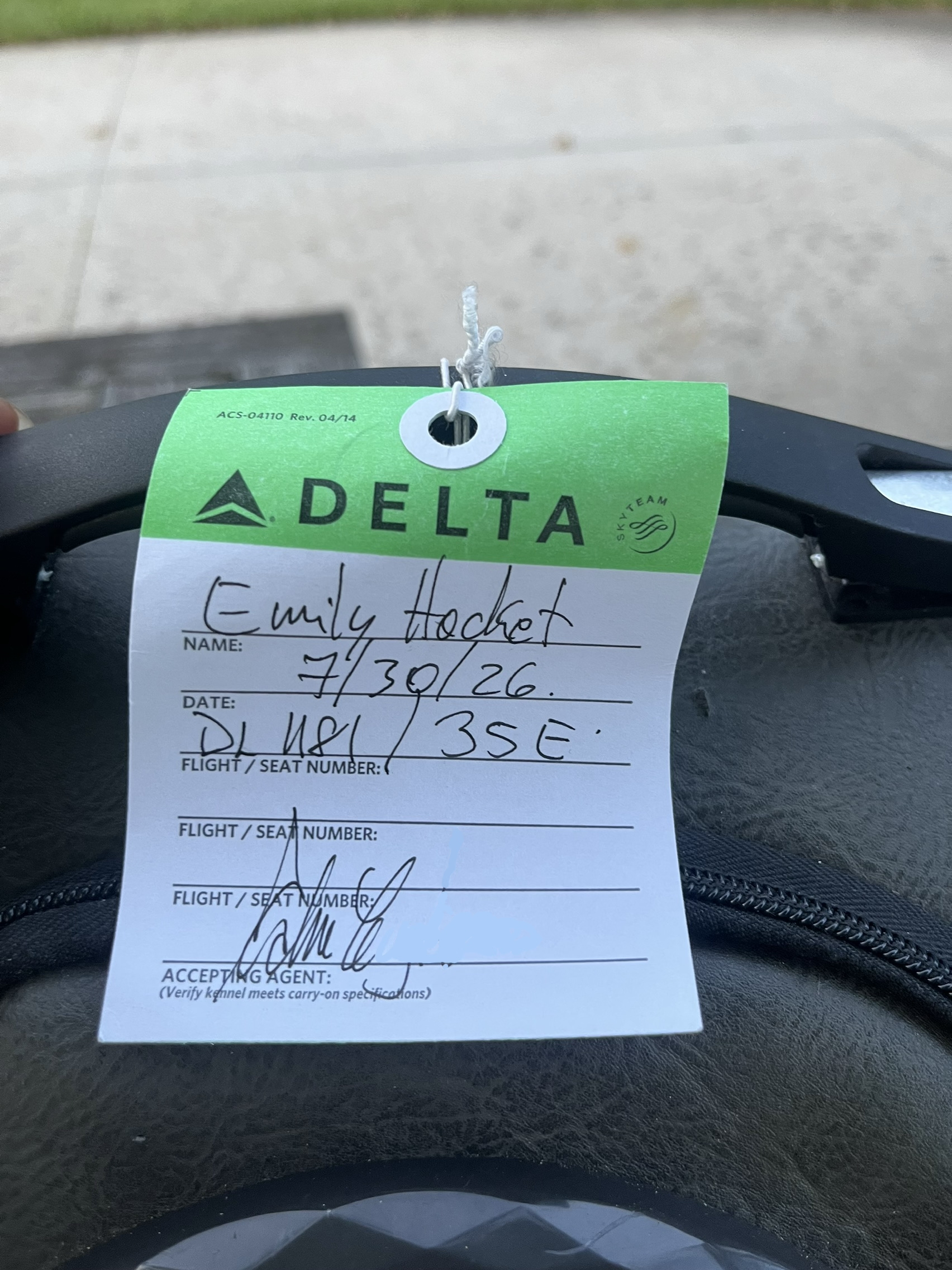
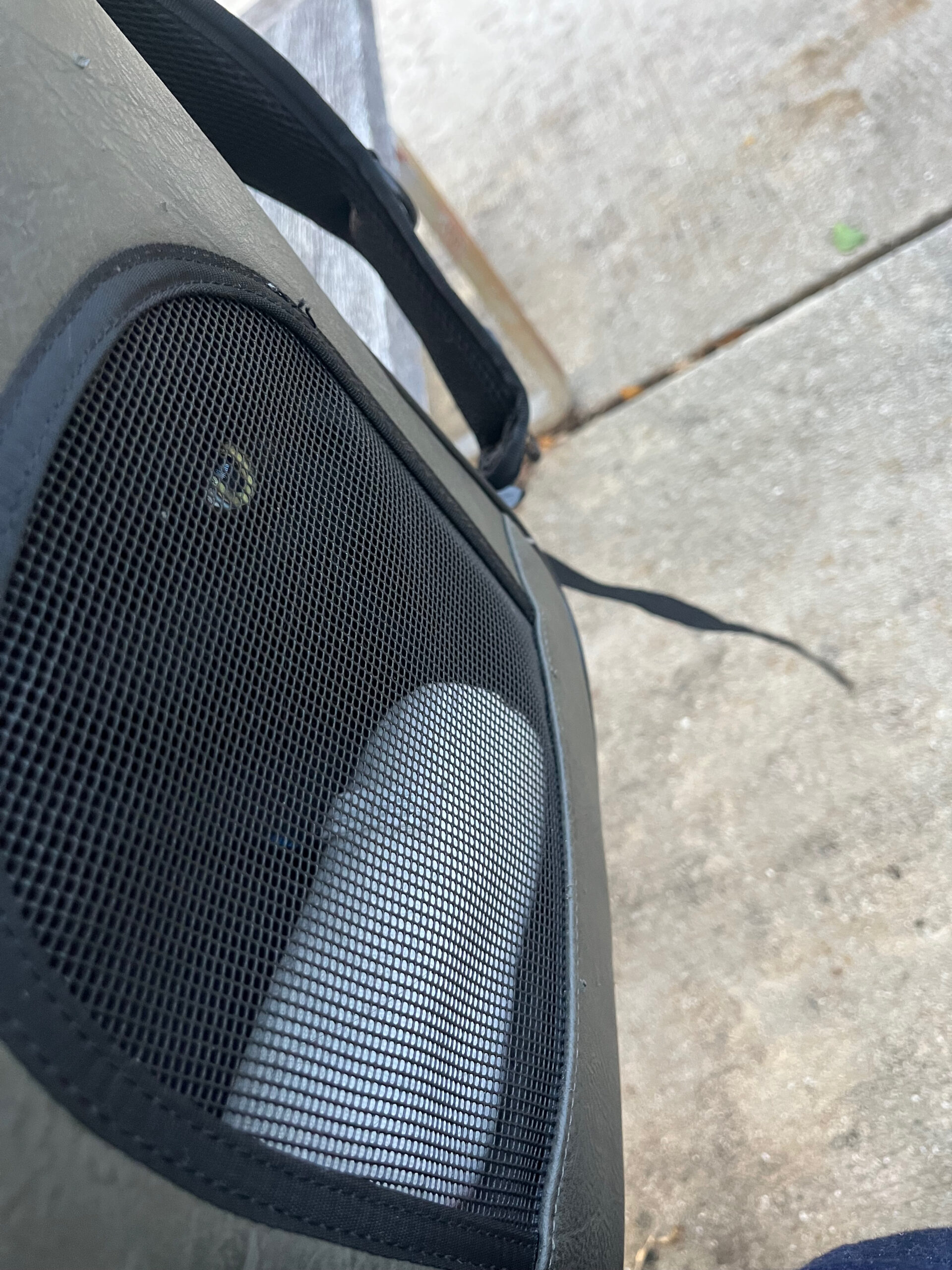
Delta’s interesting misspelling of my name and Rio in his carrier.
August 2026. This was a month of multiple adjustments. In August, I learned that the grocery store was not a five-minute walk, and it didn’t open at 6:00 AM, like Food Bazaar does in East Harlem. Now, my grocery trip is a fifteen-minute bike ride, thirty minutes round trip. That’s a minor change but still meaningful, as it affects my time. Maybe I’ve traded the time to prepare for sleep with the time to run errands, as I live in a place that seems generally conducive to sleep. My suburban apartment feels like the quietest place I’ve ever lived, likely because I just moved from what I think of as the noisiest place in the world, and perhaps expectedly, the subtle sounds here do not disrupt my sleep.
October 2026. I’m writing this in October, but I’m not sure when it will make it into the world, perhaps in November as scheduled. We’ll see.
October is when I internalized that I had a this-specific-journal consistency problem, something that I sometimes think of as “notebook debt.” I realized it in September 2024 during one of my most stressful apartment moves. After September, I barely touched the dated book again. I moved to unbound pages, ones that I could move around, tear out, or hide away (from). At the core, I think I abandon notebooks because, once I sort through something, or at least once I think I have sorted through something, I don’t want to deal with it again. I’ve finished. And my notebook, particularly my morning page, is where I work through every little tragedy that comes to me.
The pages have allowed us to vent without self-destruction, to plan without interference, to complain without an audience, to dream without restriction, to know our own minds.
- Julia Cameron, The Artist’s Way
By this point, you might have noticed that I keep clear documentation and timelines. These notes serve as a sort of sanity check and allow me to make measured decisions. In September and October, I had several conversations, the exact details of which I cannot disclose, but many of them left me feeling flustered. I wrote down a condensed timeline in my dated journal to get a sense of the particulars within that series of events that had triggered the unease. One Tuesday morning, I discussed with someone the work that I do, the work to which I have dedicated many years. I am deeply invested in connections among sleep, memory, and cognitive aging, and it is important to me that the time I spend on that research is applicable to those who are most affected by age-related cognitive decline. When I am a principal investigator, or when my resources are used to make a study happen, I need the inclusion criteria to be chosen deliberately because the outcomes of my research concern health trajectories in older age, and those trajectories impact individual outcomes and families. That Tuesday evening, my mother called me and told me that a person close to the two of us, someone who spent years of his life taking care of me and others, who was a trusted health professional I would always call when I felt ill, who used to always respond, was showing signs of abnormal brain aging. In the weeks that followed, I wrote a grant proposal to a foundation that funds brain aging research, and something about the timing of these events, the temporal proximity of them, made me push the dated journal away for a while. Several blank pages followed the timeline that I wrote down in my notebook, and there have been many pauses between that timeline and this abridged one that I am sharing here .
Deep reflection is clarifying, but it takes time to move from the mind to the page. And I am still sorting through these series of events. More has happened, more that I need to consider, in time.
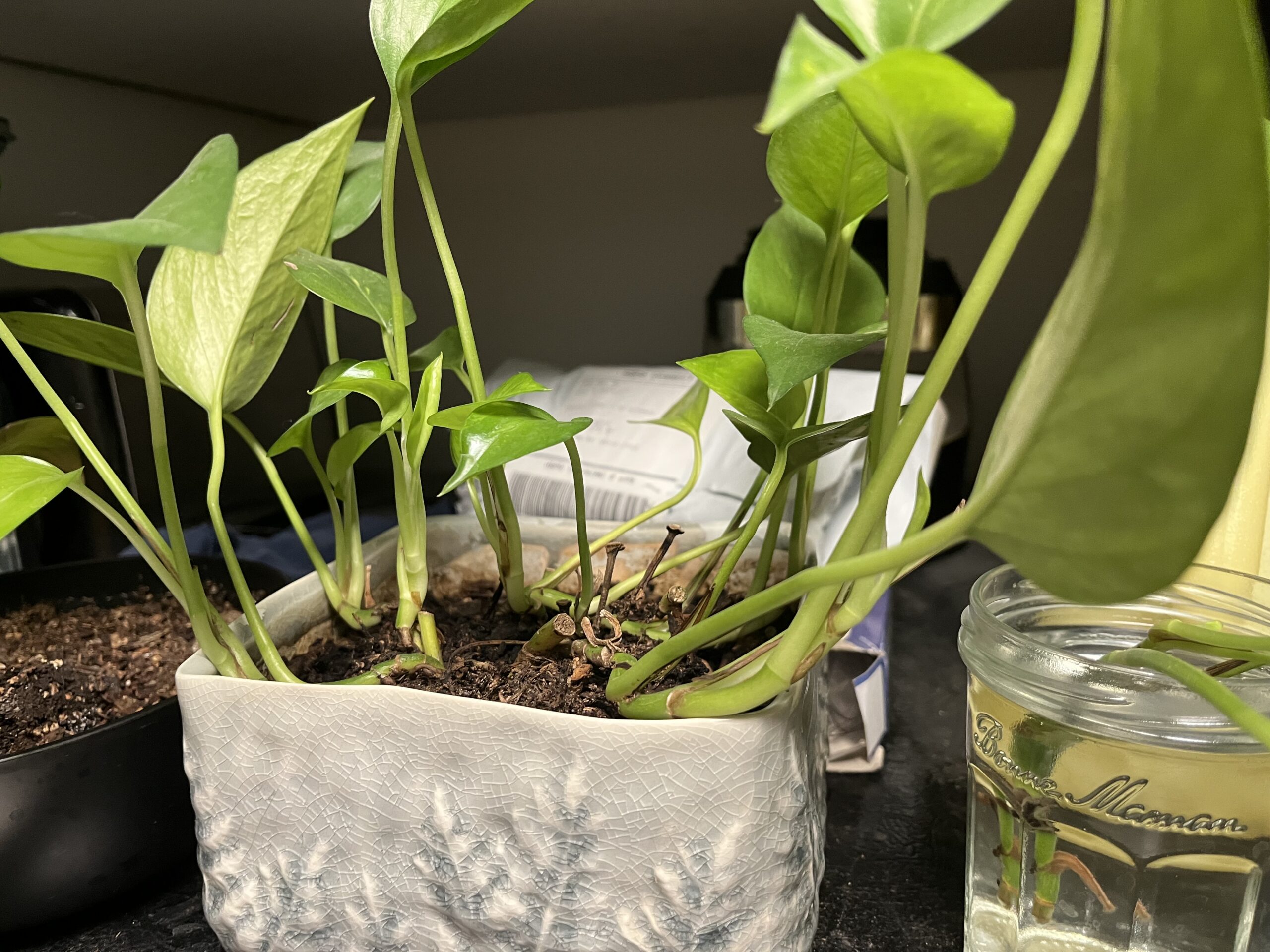
I’ve been thinking a lot about one particular poem that someone shared earlier this year at the New York Public Library Writing Circle. The poem’s repetition of the word “Breath” reminds me of the importance of empty space, even in a regular writing habit or dated journal, where we would think we need consistency. Sometimes, instead, we need a moment and must learn to take that time to breathe. While consistency helps with building habits and such, in and of itself, it is not a panacea. You can water a plant on a consistent schedule, but if its health is declining, you cannot continue the same treatment and expect improvement. Pothos plants are incredibly resilient. They are the only plants that I’ve been able to keep alive for more than a few years, but place two in a pot too small, and even with consistent care, under those poor conditions, they will both wither and die. Sometimes space is that extra element that we need for our ideas to route their fair course, to grow and to thrive.
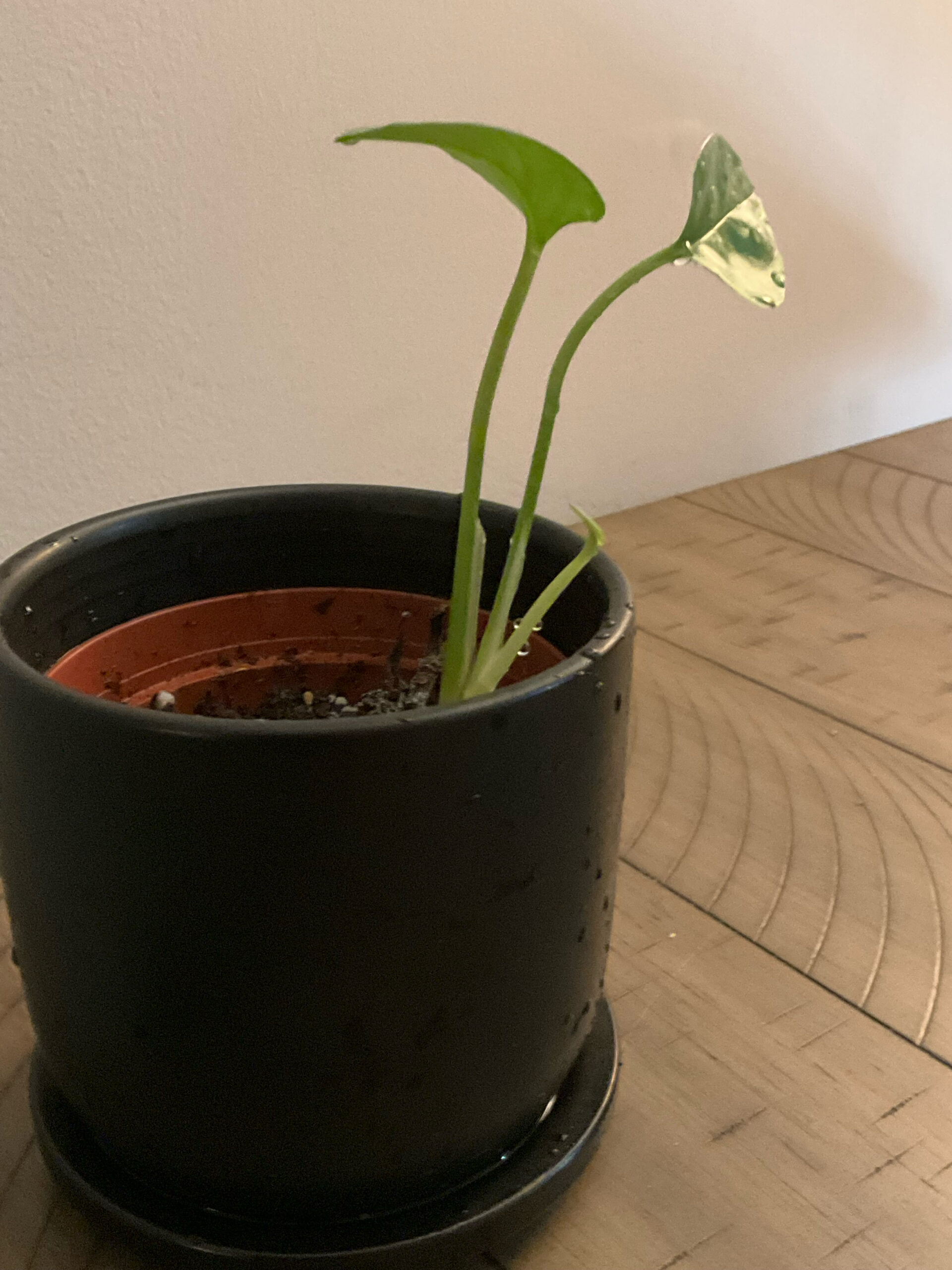
In First You Write a Sentence, Joe Moran reminds us of the meaning of space:
“Something only exists in relation to nothing. Unless the rest of the page is empty, the words cannot be read.”
Deliberate pauses can be powerful. With them and adequate rest, we gain clarity, and sometimes that clarity takes time that cannot be scheduled or planned or known. Blank space allows us the room to resolve internal inconsistencies. Temporal space, time, is our most valuable resource. Allow no one to deprive you of the margin you need to think, to sleep, to breathe.
Notes
- Temporal Transparency: I started typing the first draft of this on Sunday, October 18th, 2026, a little over a month before the final edit.
- I’d love to hear from you. Chat with me directly and send feedback, questions, or article requests to: thoughts at emilyhokett dot blog.
- Find more of my writing on Substack, Medium and here at emilyhokett.blog.
- A recent Substack article on balancing rest and running: https://emilyhokett.substack.com/p/sleep-is-for-recovery
- Buy me a tea🍵 to support the maintenance of the blog.
Take care. Talk soon.