2026 Notebook Check-in 1
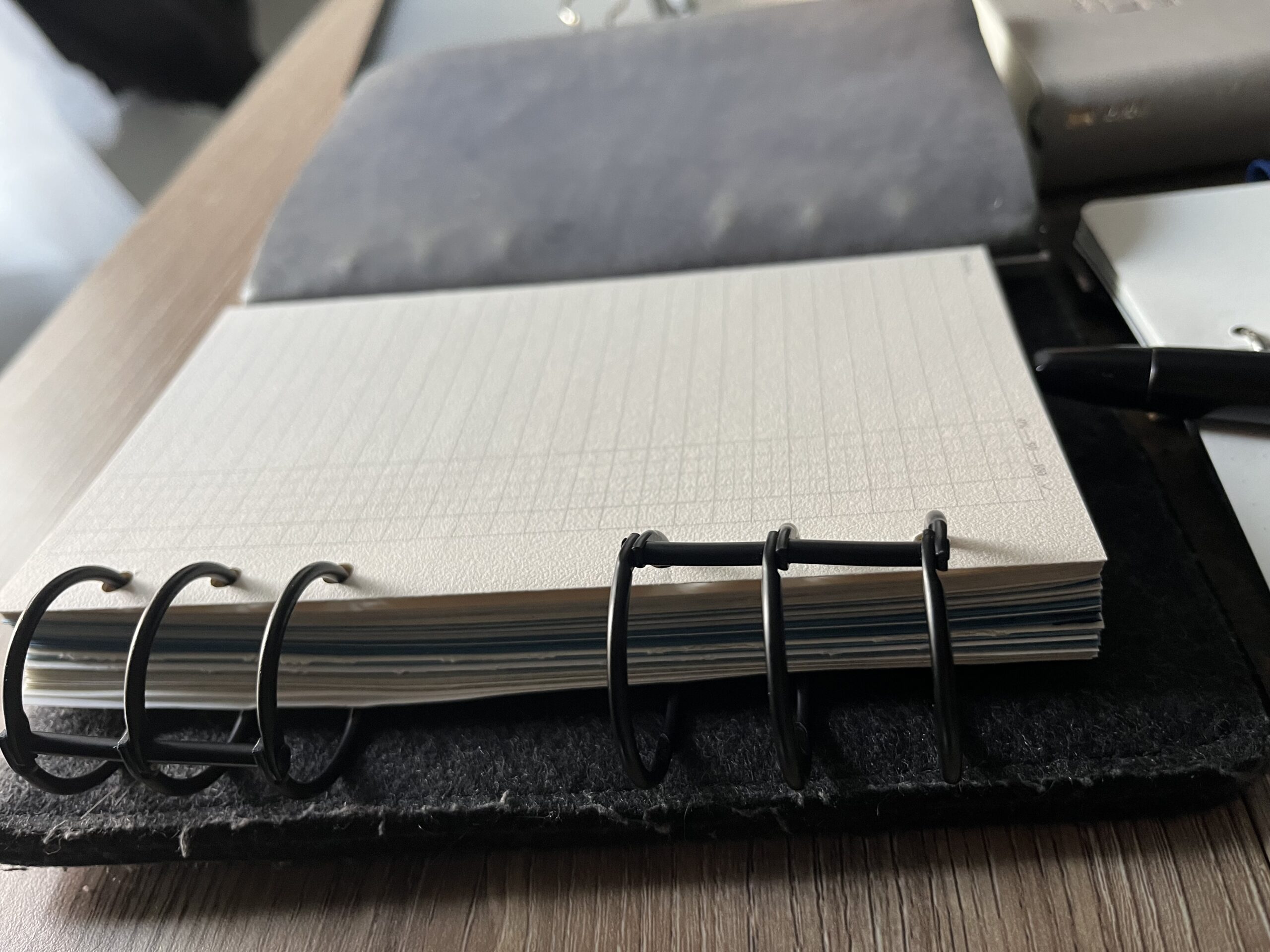
About a year ago, I started journaling in a binder. I like writing in binders for many reasons, but principally because the pages lie flat and are easily archivable. Bound books symbol a type of permanence that sometimes makes me feel uncomfortable. I use binders and bound books for different types of writing that I explain below.
Using a Binder for Flexible Writing Systems
Binder systems are good for two broad writing categories. The first is writing down raw, unfiltered feelings. The second is flexibly organizing infomration.
I prefer to work through my thoughts in writing. I have been journaling since I was in elementary school with a small, pink notebook that was secured with a physical lock and key, but I started journaling more seriously in the summer of 2019 during my graduate program. I began with digital journling, just tapping daily thoughts on my phone with the DayOne app. There, I felt protected by the end-to-end encryption and would write about anything that weighed on my mind. Converting to an analog-first system, my journaling had become more censored. I would carefully choose my wording and expression as to not offend the hypothetical person that may happen upon my journals. I tempered this fear by placing a warning in the front of my journals, a disclaimer of sorts. It reads: the words here are for the author and only the author. If you read these words and feel offended, it is your own damn fault. This little message is something that I picked up from journaling subreddits, running and signing waivers to stay on the designated trail and such. The warning that I wrote in my notebooks helped some, but I think what helps the most is journaling in a way that feels more flexible and less permanent. One of the simplest ways for me to do this is journaling in a binder.
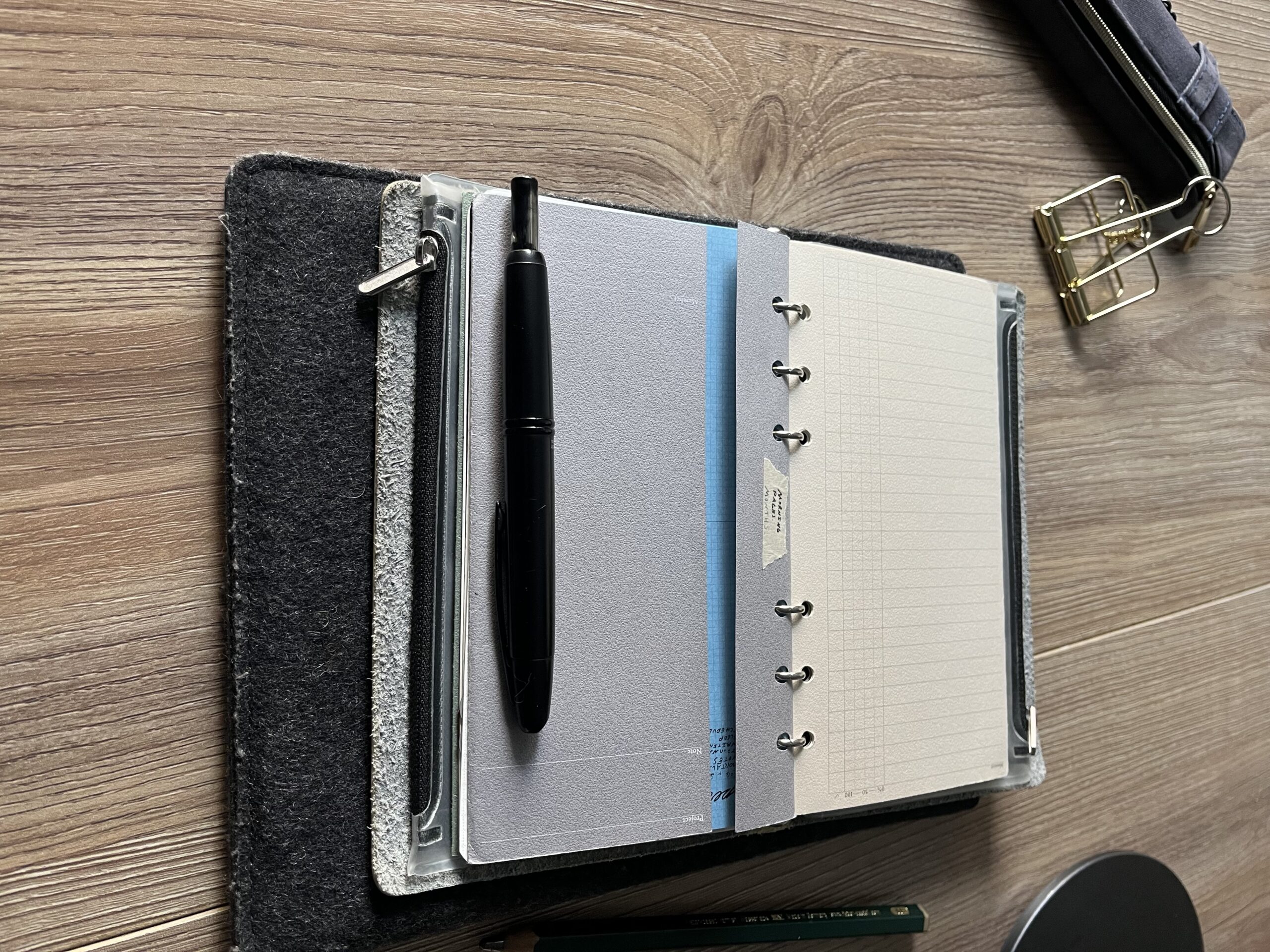
When I journal on loose pages instead of bound ones, I don’t feel so bound to the words. I journal to process my thoughts, particularly with early morning pages. The words on those pages are not always pleasant. Sometimes I myself don’t even want to see them again, and I certainly don’t want to carry them around with me. With a binder system, I don’t have to. The pages are detachable. They can be archived or tossed out without damaging the binder (though I have yet to destroy any journaling pages). With a bound book, when I would write something that upset me, I would abandon the book, leaving the remaining empty pages. When I write something that upsets me in my binder, I simply archive the page. Fresh start, same binder system, and it’s lovely.
I also use binder systems to organize information, for notes, outlines and first drafts. When I write notes by hand, I like to be able to move the information around without having to rewrite it.
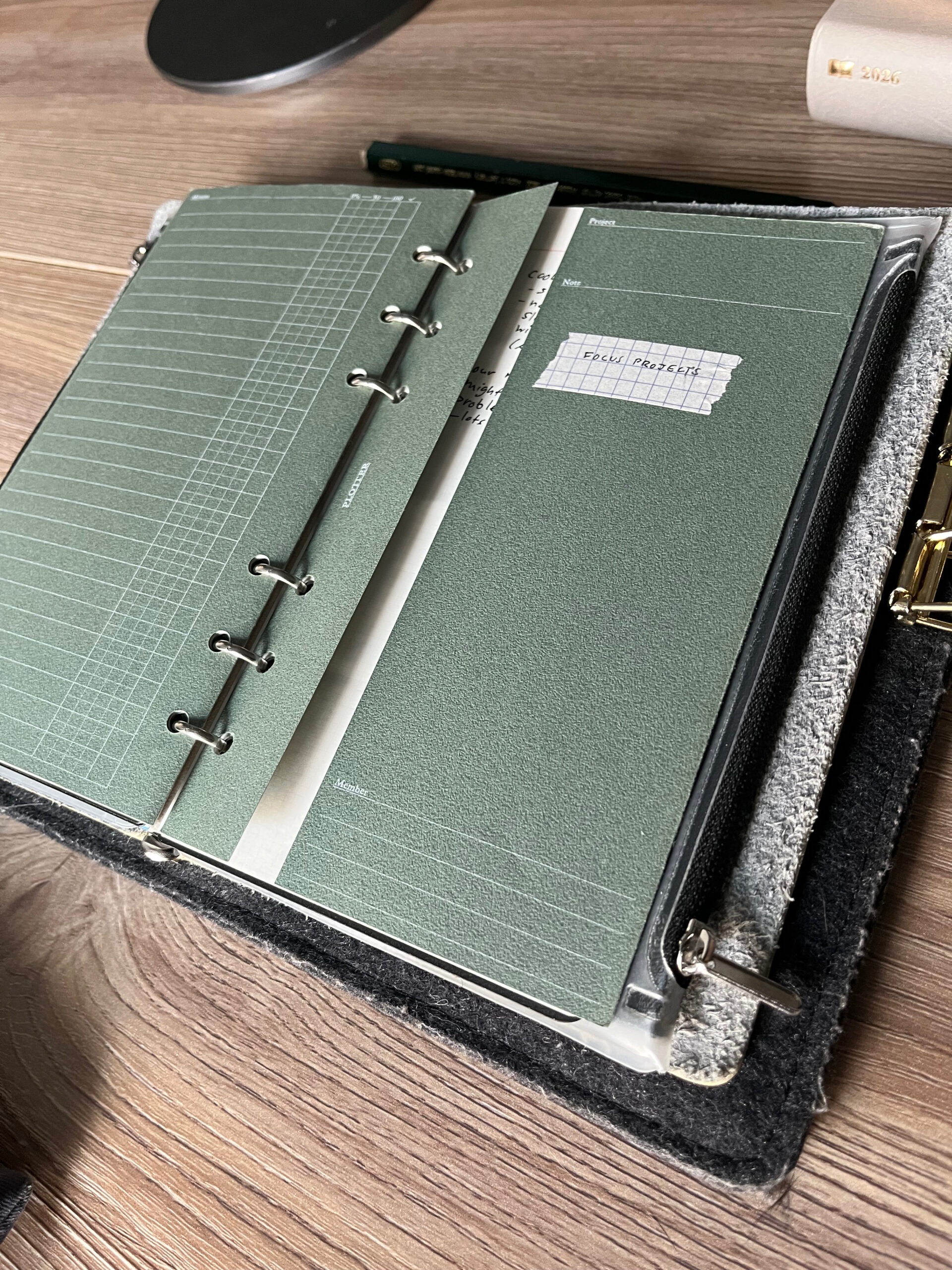
I have a lot of ideas. Many of them are bad, but a few of my ideas are good (or at least interesting). I write many of them down in a binder.
When I have an idea that I want to build on, I can move the pages around to keep all information related to that one idea in the same space. It may only take a page or two before I’m typing it up (to build onto it) or tossing it out (to make space for better ideas).
In the past, I would dedicate full notebooks to single writing ideas, or I would try to section them using an index, bullet journal style. With the former, I would think too much about which notebooks to carry with me, or when the idea was no longer interesting to me, I would stop using the notebook (and feel guilty about it). With the latter, indexing felt too cumbersome and too chaotic. I wanted to be able to easily build on ideas, not thread them with handwritten links. So I stopped trying to use bound notebooks for free-flowing ideas. To focus and build onto ideas, binders work better (for me) than bound books.
Using a Bound Book for Chronological Information
I still enjoy a good bound notebook. Threadbound, square grid, A6, that has been my preference for the last several years.
These days, I use one bound notebook on a daily basis. It is a daily notebook that I use to track time, and it is a notebook that I had sworn off a couple of years ago: the Midori Hibino.
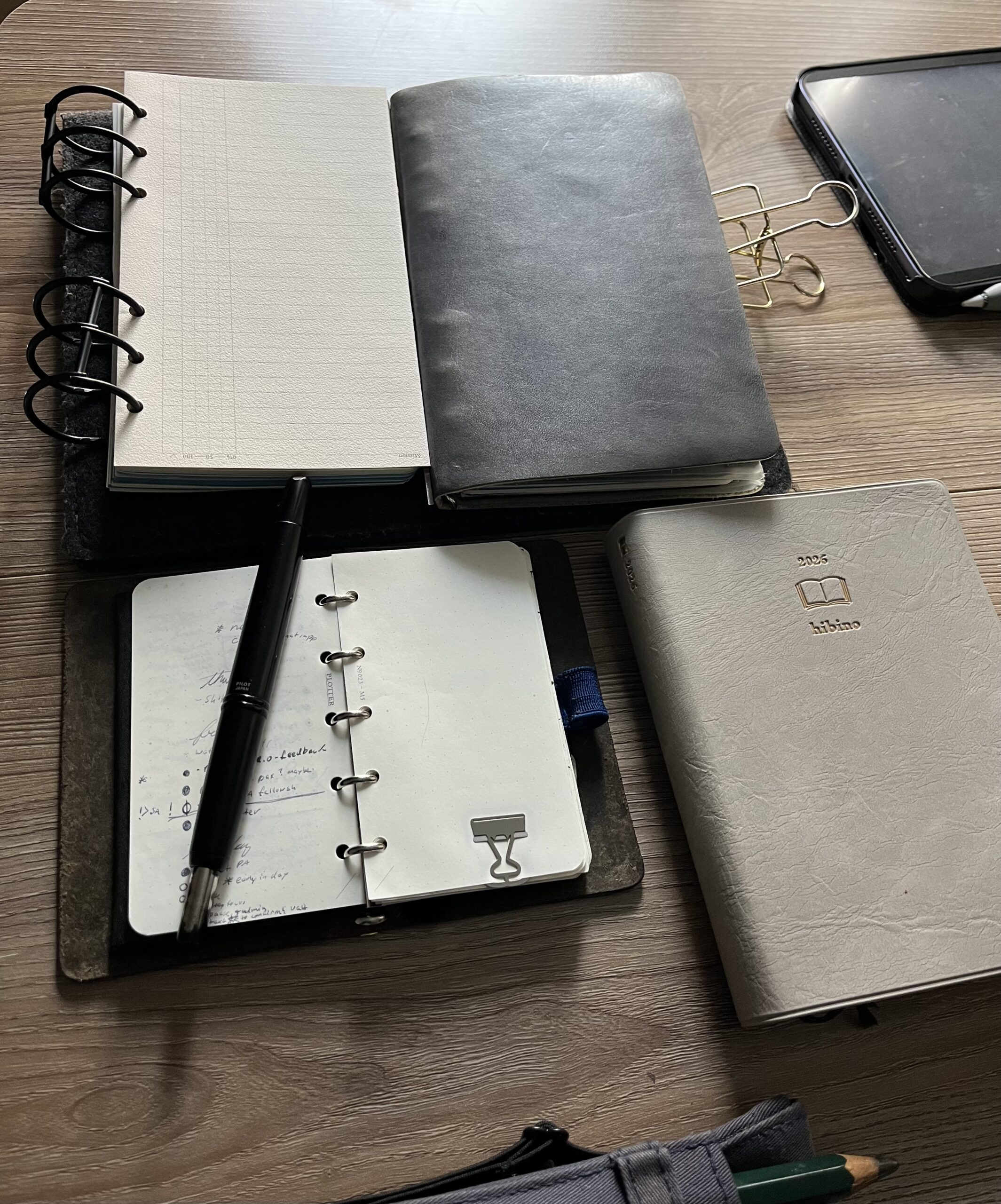
I stopped using the Hibino in 2024 because I wrote almost everything there, planning, morning pages, and recapping my day with the timeline. As much as I would love to be a one-notebook person, I simply do not function that way. I need to compartmentalize ideas to focus on any one of them. Also, because my early morning journaling is not always writing that I want to casually revisit, I abandoned the book. After I moved to my second apartment in Manhattan in 2024, I rarely opened the notebook for the rest of that year.
In 2025, I realized I really missed a simple way to recap my day through time with little rewriting, preparation, or glowing screens. The layout of the Hibino offers that.
In a word, my daily bound book is for chronicling. I note the time when I wake up, write, run, work, and sleep. I also note other events of the day as they happen. The dated structure of this book helps me to concentrate on the events of the day, what I had planned, what happened, and a brief reflection about it. It gives me ample space to reflect on the present moment without ruminating on the distant past or planning for the hypothetical future. My bound notebook is a space for daily reflection that encourages me to focus on the present, and the present moment is often quite manageable.
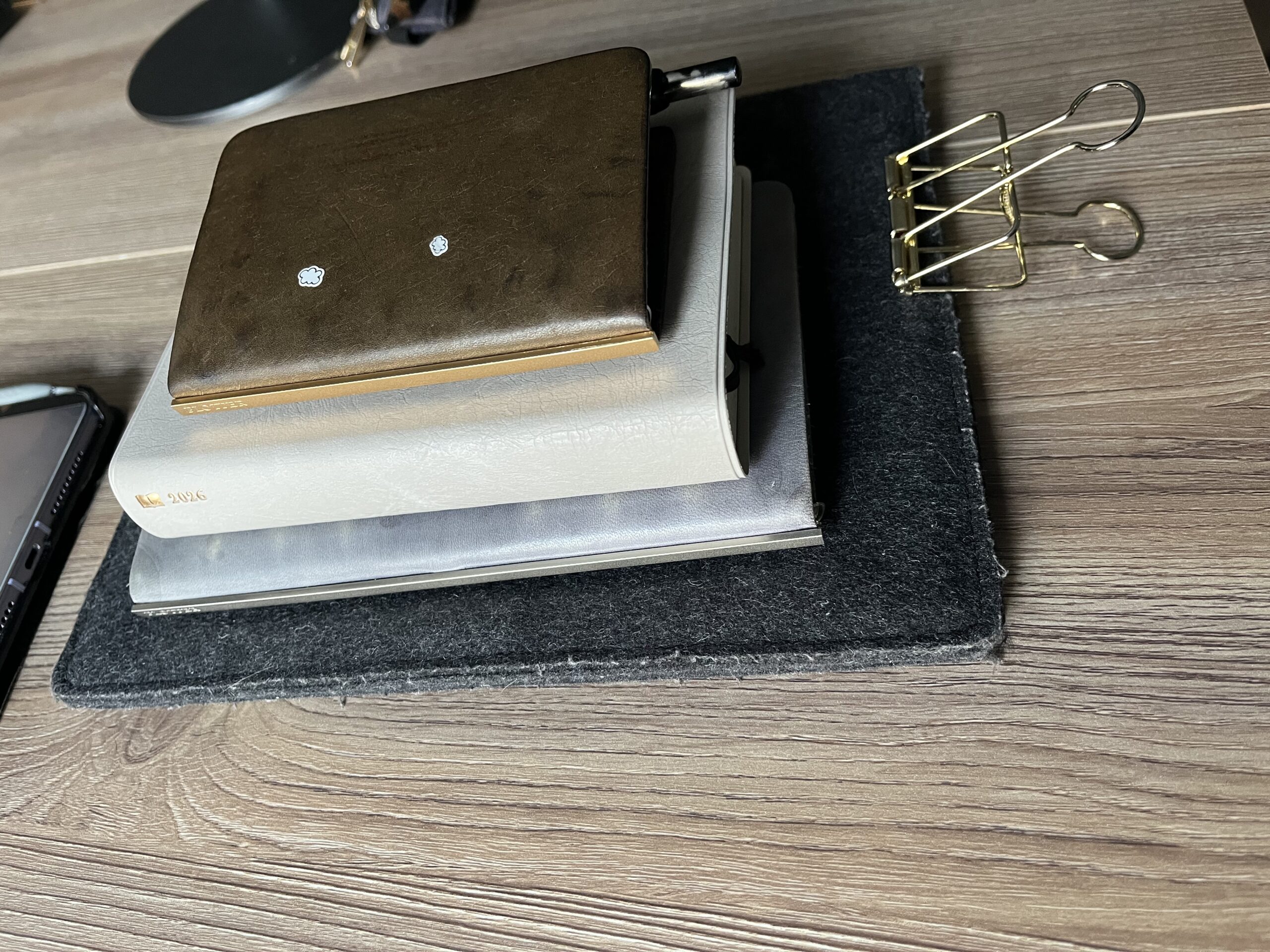
This past January, I kept a three-book system: one tiny binder that I use as for everday carry that helps me manage my life, one personal-sized binder with separate sections for morning pages and notes, and the bound, Midori Hibino for chrnonicling the day. As I’m currently traveling, I realize that the Hibino is a little too thick for my bag, so I’ll summarize my daily logs when I return home. Most days, though, the three tools work for me, and perhaps that is as much peace as I will ever feel regarding my analog note-taking systems.
- I’d love to hear from you. Chat with me directly and send feedback, questions, or article requests to my new email thoughts at emilyhokett.blog.
- Find more of my writing on Substack, Medium and here at emilyhokett.blog.
- Buy me a tea🍵 to support the maintenance of the blog.